 Quick Answer: Which Option Is Best?
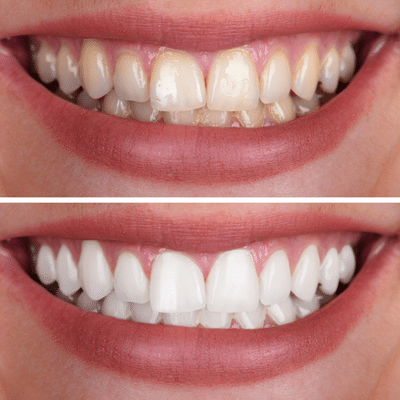
At Ashburn Dentistry by Design in Ashburn, VA, the best teeth whitening options depend on your goals, budget, tooth sensitivity and how quickly you want results. In-office whitening typically provides faster results under professional supervision, while at-home treatments gradually brighten your smile over several days or weeks. Both can be effective, but an evaluation helps determine which approach is safest and most appropriate for your teeth.
Key Takeaways
- In-office whitening generally delivers faster results, often with a noticeable difference after one appointment.
- Professional at-home whitening uses dentist-provided trays and whitening gel to brighten teeth gradually.
- Over-the-counter products may help with mild discoloration but offer less customization and professional oversight.
- Tooth sensitivity and gum irritation are possible with any bleaching treatment, although these effects are usually temporary.
- Professional evaluation matters, because whitening doesn’t work equally well on every type of stain or on existing crowns, veneers and fillings.
In-Office vs. At-Home Whitening: What’s the Difference?
Both in-office and at-home whitening can brighten natural teeth, but the biggest differences are how the treatment is applied, how long it takes and the level of professional supervision involved.
Professional in-office whitening uses a concentrated bleaching solution applied by a professional. At-home whitening generally involves wearing trays containing a whitening gel or applying over-the-counter products according to their instructions.
If you’re comparing teeth whitening options, understanding these differences helps you choose a treatment that fits your lifestyle and expectations.
How Does It Work?
Most professional whitening treatments use hydrogen peroxide or carbamide peroxide to break down compounds responsible for discoloration. These ingredients penetrate the enamel and help reduce staining within the tooth structure.
Discoloration generally falls into two categories:
- Extrinsic stains: Surface discoloration caused by coffee, tea, red wine, tobacco and certain foods.
- Intrinsic stains: Discoloration within the tooth caused by aging, injuries, certain medications or changes during tooth development.
Not all stains respond equally to bleaching. For example, yellow discoloration often responds more predictably than certain gray or deep internal stains.
The American Dental Association (ADA) recommends an examination before whitening to identify possible causes of discoloration and determine whether treatment is appropriate.
What Is In-Office Whitening?
In-office whitening is a professional cosmetic treatment performed in a dental office using bleaching agents that are generally more concentrated than those found in over-the-counter products. In-office treatment is one of the most popular teeth whitening options for patients who want noticeable results in less time.
During treatment, our team protects your gums and applies the whitening solution to your teeth. Depending on the whitening system and your needs, treatment may involve one or more applications.
Benefits of In-Office Whitening
Patients often choose in-office whitening for several reasons:
- Faster results: Many patients notice a difference after one appointment.
- Professional supervision: Our team monitors the treatment and helps manage potential sensitivity.
- Personalized care: Treatment can be adjusted based on your dental health and whitening goals.
- Convenience: Much of the whitening process takes place during a scheduled office visit.
In-office whitening may be especially appealing if you’re preparing for a wedding, graduation, professional event or another special occasion.
However, results vary depending on the original shade of your teeth, the type of discoloration and your response to treatment. Some patients may need additional whitening sessions or maintenance.
Are There Any Disadvantages?
Although in-office whitening offers convenience and speed, there are a few considerations.
Professional treatment generally costs more upfront than store-bought products. The stronger bleaching agents used in some office-based treatments can also cause temporary tooth sensitivity or gum irritation.
Additionally, a single appointment may not fully address deeper or more resistant discoloration.
What Is At-Home Whitening?
At-home whitening allows you to gradually brighten your smile outside the office. Options include professional whitening trays provided by our dentists and over-the-counter products such as whitening strips, gels and toothpaste.
While these products share a similar goal, they differ in strength, application and effectiveness.
Professional At-Home Whitening Trays
Dentist-supervised at-home whitening typically involves trays designed to fit your teeth and a professional whitening gel.
Among the available teeth whitening options, professional trays offer a convenient way to brighten your smile with guidance from our dentists.
Our dentists provide instructions explaining how much gel to use, how long to wear the trays and how frequently to repeat treatment.
Benefits include:
- Whitening your teeth at convenient times
- Gradual, controlled color changes
- Professional guidance throughout treatment
- Customized trays that help keep the gel in contact with your teeth
Most patients need repeated applications over several days or weeks to achieve their desired results.
Professional at-home whitening may be a good choice if you prefer a gradual approach or want flexibility around your schedule.
Over-the-Counter Whitening Products
Drugstores and online retailers offer several teeth whitening options, including:
Whitening strips: Thin strips containing bleaching ingredients that adhere to the teeth. They may lighten natural teeth when used consistently.
Whitening toothpaste: Products designed primarily to remove surface stains through polishing ingredients. Most do not significantly change the underlying color of teeth.
Whitening gels and trays: Products containing bleaching solutions that patients apply at home. Their effectiveness depends on the ingredients, concentration and fit.
Although over-the-counter products may cost less, they aren’t necessarily suitable for everyone. Poorly fitting trays, excessive use or improper application may increase sensitivity and gum irritation.
Look for products with the ADA Seal of Acceptance when available, and ask our dentists before beginning treatment.
Comparing Teeth Whitening Options: Which Treatment Is Right for You?
Choosing between professional and at-home whitening involves balancing convenience, cost, treatment time and your desired results.
| Feature | In-Office Whitening | Professional At-Home Whitening | Over-the-Counter Whitening |
| Treatment location | Office | Home | Home |
| Time to results | Often one visit | Days to weeks | Days to weeks or longer |
| Professional supervision | Direct | Dentist-guided | Generally none |
| Customization | Personalized | Personalized | Limited |
| Cost | Generally higher | Varies | Generally lower |
| Sensitivity | Possible | Possible | Possible |
| Best suited for | Faster results | Gradual whitening | Mild staining or surface stains |
No single method is best for everyone.
For example, someone hoping to brighten their smile before an upcoming event may prefer in-office treatment. Someone with a flexible timeline may find professional at-home whitening more convenient.
The condition of your teeth and gums should also influence your decision.
Who Is a Good Candidate for Whitening?
Whitening may be appropriate for adults with healthy teeth and gums who want to reduce discoloration and brighten their natural smile.
You may benefit from whitening if you notice:
- Yellowing associated with aging
- Stains from coffee, tea or red wine
- Discoloration related to tobacco use
- Gradual changes in your natural tooth shade
- Surface stains that remain after regular brushing
However, certain conditions require additional evaluation before whitening.
When Might Whitening Not Be Recommended?
Our dentists may recommend postponing or modifying whitening treatment if you have:
- Untreated cavities or tooth decay
- Gum inflammation or periodontal disease
- Significant tooth sensitivity
- Exposed tooth roots
- Cracked or damaged teeth
- Extensive restorations on visible teeth
It’s important to remember that whitening products don’t change the color of crowns, veneers, fillings or other tooth-colored restorations.
If you have restorations on your front teeth, bleaching your natural teeth could create a noticeable color difference.
A single tooth that suddenly becomes gray or dark, particularly after an injury, also deserves evaluation before cosmetic treatment. Discoloration can sometimes indicate an underlying problem.
What Treatments Does Ashburn Dentistry by Design Offer?
Ashburn Dentistry by Design offers professional in-office whitening and at-home whitening trays to accommodate different patient preferences.
Our practice also offers KöR Whitening, a professional whitening system designed to address tooth discoloration using a dentist-supervised bleaching process.
Unlike some whitening systems, KöR doesn’t rely on lasers or light activation. Treatment can be customized according to a patient’s staining, sensitivity and whitening goals.
For patients with more persistent discoloration, our team evaluates whether KöR Whitening or another approach may be appropriate.
Learn more about our practice’s professional teeth whitening options in Ashburn, VA.
A Dental Team’s Perspective on Whitening
At Ashburn Dentistry by Design, personalized treatment and patient comfort are important parts of cosmetic dental care.
Rather than selecting a whitening product based solely on its advertised results, our team considers the condition of your teeth, existing restorations, sensitivity and desired outcome.
This approach helps patients understand what whitening can realistically accomplish before beginning treatment.
Is Professional Whitening Safe?
Professional whitening is generally considered safe for appropriately selected patients when performed or supervised by a qualified professional.
However, even properly administered treatments can produce temporary side effects.
The two most common concerns are:
Tooth sensitivity: Some patients notice increased sensitivity to cold beverages, air or temperature changes during or shortly after whitening.
Gum irritation: Whitening gel that contacts the gums may cause temporary irritation or discomfort.
These effects usually improve after treatment ends. If sensitivity becomes uncomfortable, our dentists may recommend adjusting the whitening schedule, temporarily stopping treatment or using a desensitizing product.
Avoid applying additional whitening gel or extending treatment times in an attempt to speed up results.
According to the ADA, excessive or improper use of whitening products may increase the risk of irritation and damage to tissues.
What Happens During a Consultation?
A professional whitening consultation helps determine whether bleaching is appropriate and which treatment may provide the best results.
Our dentists will typically:
- Examine your teeth and gums: Check for cavities, gum problems, existing restorations and other concerns.
- Evaluate discoloration: Identify the likely causes of staining and discuss which areas may respond to whitening.
- Discuss your goals: Review your preferred tooth shade, timeline, sensitivity and budget.
- Recommend treatment: Explain the benefits and limitations of suitable whitening methods.
- Review maintenance: Provide instructions for caring for your smile after treatment.
If your discoloration is caused by a condition, our dentists may recommend addressing that concern before beginning cosmetic whitening.
How Can You Keep Your Teeth White After Treatment?
Whitening results aren’t permanent, but consistent oral care can help reduce new staining and maintain your smile. Regardless of which teeth whitening options you choose, maintaining good oral hygiene helps preserve your results.
Helpful Habits for Maintaining Whitening Results
- Brush twice daily using fluoride toothpaste.
- Clean between your teeth every day.
- Rinse your mouth with water after drinking coffee, tea or other staining beverages.
- Avoid tobacco products.
- Attend regular exams and professional cleanings.
- Ask our dentists whether occasional whitening touch-ups are appropriate.
Your brushing technique also matters. Using a soft-bristled toothbrush and gentle pressure can help protect your enamel and gums.
For additional guidance, read our article about the pros and cons of electric vs. manual toothbrushes.
Whitening Methods You Should Avoid
Not every popular whitening trend is supported by research.
Avoid using household bleach, lemon juice, vinegar or abrasive mixtures to whiten your teeth.
Charcoal-based products and other do-it-yourself remedies may also lack reliable evidence of effectiveness and safety.
Instead, choose professionally recommended products and follow the instructions carefully.
Find the Right Teeth Whitening Options in Ashburn, VA
Choosing a treatment should begin with understanding your smile, not simply selecting the strongest product available.
At Ashburn Dentistry by Design, our team helps patients explore professional whitening treatments based on their goals, dental health and preferences.
Whether you’re interested in faster in-office results or the flexibility of at-home whitening, we can help you understand your options and develop a personalized approach.
Ready to explore a brighter smile?
Learn more about our whitening treatments or request an appointment with our Ashburn team to discuss which option may be right for you.
Meet Dr. Maria Obregon Merlo
Dr. Maria Obregon Merlo is a dentist at Ashburn Dentistry by Design with a special interest in cosmetic and restorative dentistry. She is passionate about helping patients feel more confident in their smiles while providing compassionate, personalized care.
Originally from Nicaragua, Dr. Obregon earned her Doctor of Dental Surgery from Universidad Americana in Managua. She later completed her Doctor of Dental Medicine at Tufts University School of Dental Medicine in Boston.
Her own experience with orthodontic treatment helped inspire her interest in dentistry and its ability to make a positive difference in patients’ lives.
Dr. Obregon values the combination of science, creativity and patient relationships involved in care. She enjoys helping patients understand their treatment options and working toward healthy, attractive smiles.
Outside the office, she enjoys hiking, salsa dancing, traveling, exercising and spending time with family and friends.
Learn more about Dr. Maria Obregon Merlo and the Ashburn Dentistry by Design team.
Frequently Asked Questions About Teeth Whitening Options
1. Is in-office whitening better than at-home?
In-office whitening isn’t necessarily better for everyone, but it typically produces results faster than at-home treatment. Professional whitening uses concentrated bleaching agents under direct supervision, making it appealing for patients who want noticeable changes within a shorter timeframe.
Dentist-supervised at-home whitening can also provide effective results, although it generally requires repeated applications over several days or weeks.
Both treatments have benefits. The best choice depends on your tooth discoloration, sensitivity, schedule and personal preferences. An examination helps identify the most appropriate approach.
2. How long does professional whitening last?
Professional whitening results may last several months to a few years, depending on your oral hygiene habits, diet, tobacco use and the type of treatment received.
Frequent consumption of coffee, tea, red wine and other staining substances may cause discoloration to return sooner.
Brushing regularly, flossing daily and attending professional cleanings help maintain your results. Some patients may also benefit from occasional touch-up treatments recommended by our dentists.
Whitening doesn’t permanently prevent new stains from developing, so long-term maintenance plays an important role.
3. Can it damage your enamel?
Whitening is generally considered safe when appropriate products are used correctly, but excessive or improper bleaching may damage enamel or irritate surrounding tissues.
Peroxide-based whitening products can temporarily increase tooth sensitivity, particularly when used at higher concentrations or for longer than recommended.
Avoid combining multiple products without professional guidance. More frequent applications don’t necessarily produce better results and may increase discomfort.
If you have worn enamel, gum recession, cavities or existing sensitivity, our dentists will evaluate whether whitening is appropriate before treatment begins.
4. Can I whiten my teeth if I have crowns, veneers or fillings?
You can sometimes whiten your natural teeth if you have crowns, veneers or fillings, but the restorations themselves will not respond to bleaching.
This matters most when restorations are visible in your smile. If your natural teeth become lighter while the restorations remain the same shade, the difference may become noticeable.
Our dentists review the location and color of your restorations before recommending whitening. In some cases, treatment planning may involve whitening your natural teeth first and then considering whether visible restorations need replacement to match the new shade.
5. Does whitening hurt or cause sensitivity?
Whitening shouldn’t cause significant pain, but some patients experience temporary sensitivity or gum irritation during treatment.
Sensitivity may feel like a brief reaction to cold drinks, air or certain foods. These symptoms often improve within a few days after treatment ends.
If you already have sensitive teeth, let our dentists know before starting treatment. Adjusting the whitening concentration, application schedule or treatment method may help reduce discomfort.
Persistent pain, severe sensitivity or irritation should be evaluated rather than ignored.
6. Are professional whitening trays worth it?
Professional whitening trays may be worth considering if you want effective whitening with the flexibility of treating your teeth at home.
Dentist-provided trays are designed to fit your teeth, helping distribute the whitening gel appropriately. Our dentists also provide guidance about application, treatment frequency and sensitivity management.
Although professional trays generally cost more than basic over-the-counter products, they offer greater customization and clinical oversight.
They may be particularly appealing if you prefer gradual whitening or want an at-home treatment plan that can be monitored and adjusted by your team.
The Bottom Line
The best teeth whitening options depend on your dental health, the type of discoloration and how quickly you want results. In-office treatments offer speed and professional supervision, while at-home whitening provides flexibility and gradual results. A consultation helps you choose an effective approach while protecting your teeth and gums. To learn more, request your appointment today!
This article is for general educational purposes and is not a substitute for personalized medical or dental advice. Diagnosis and treatment recommendations should come from an appropriately qualified healthcare professional.